Skip to content
When lightning strikes!
A routine flight turns into a challenge
My F-4 Phantom two-ship formation is on its return flight to Germany following a high-level training exercise in Italy. The forecast weather conditions are good. Thunderstorms—which are usually a significant hazard in the summer and play a crucial role in flight route planning, and thus in planning fuel capacity and flight schedule times—are not forecast. A piece of cake, then, for an experienced crew… .
Decisions in seconds
But after about two hours of flight time—just before landing—an imposing cumulonimbus, a classic thundercloud, looms ahead of us. Even though it doesn’t look particularly threatening at first glance—we have to make decisions for which we have very little time at nearly 1,000 kilometers per hour: Do we stick to our flight plan and fly through the cloud on the designated route? Or do we deviate from our flight plan, knowing full well that this will cost time and fuel? Since air traffic controllers are still reporting no thunderstorms in the vicinity and our onboard instruments also show no danger, I, as the lead pilot, decide after weighing all the information that we will fly through the cloud instead of flying around it. My wingman and I dive into the milky-white cumulonimbus.Chaos in the cockpit
And suddenly, nothing is the same anymore! Extremely strong updrafts and downdrafts are yanking my plane upward out of control and then causing it to plummet again. Just a moment ago I was flying straight ahead, but now I’m being thrown from left to right at an angle of bank of up to 90°. I can no longer maintain my planned flight path. Seconds later, radio contact with my wingman and the air traffic controller is lost—the static charge is too high. But that’s not all!The Lightning Strike
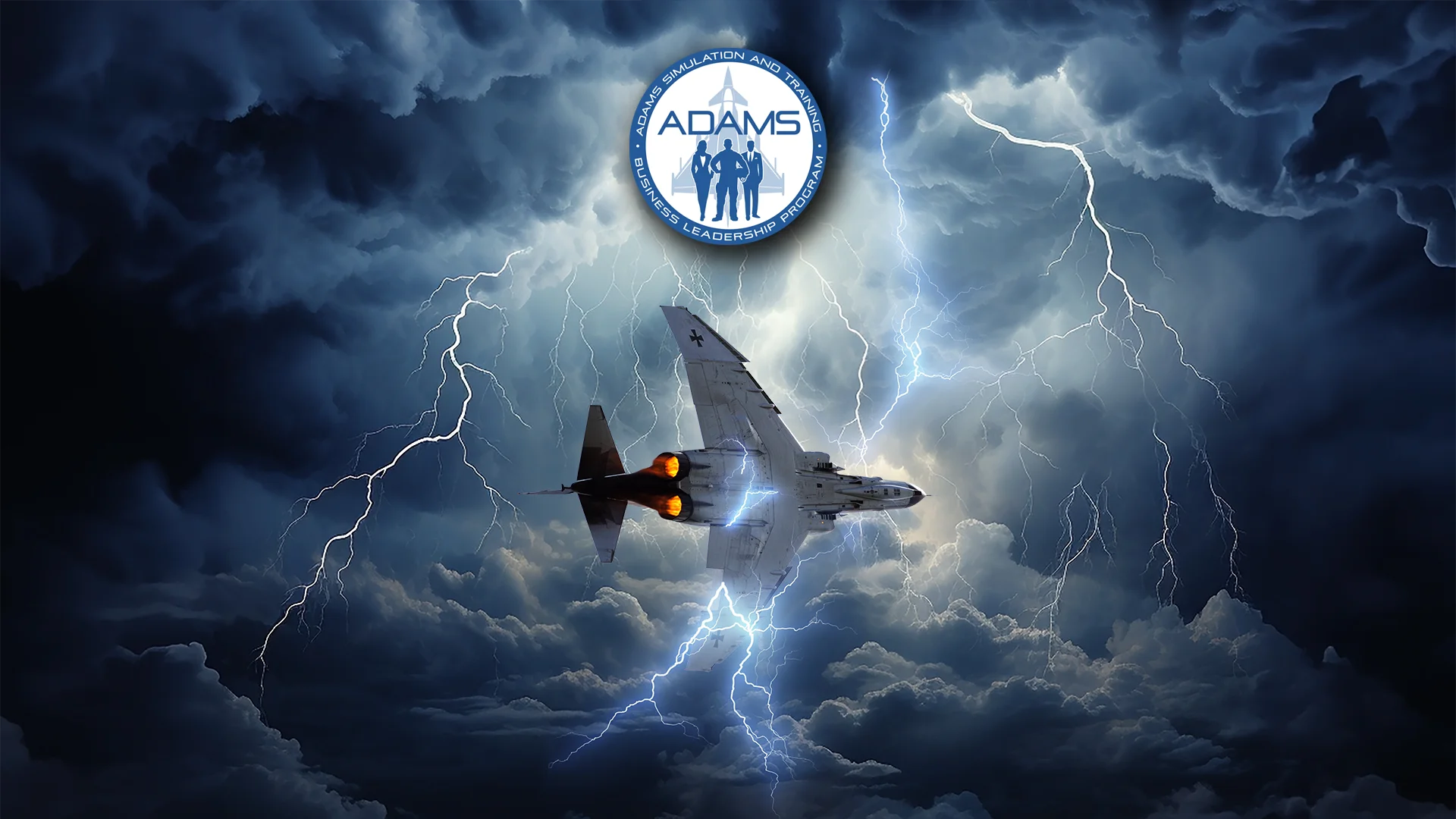
Suddenly, there’s a crackling sound on the radio, as if from an electrical charge. It’s followed by a deafening boom. A blinding flash of lightning strikes the nose of my Phantom about two meters in front of me. All our instruments are dead, including the navigation system. Thick, impenetrable smoke fills the cockpit. My backseat passenger and I both feel a tingling sensation all over our bodies—the immense energy of the lightning strike has hit us too. I know we can’t eject—the risk of being swept upward by the updrafts of the storm and freezing to death up there is too great.Training takes control
Mental checklist
Was können wir tun? In dieser bedrohlichen Situation, die innerhalb weniger Sekunden die gesamte Lage verändert hat, greift mein Training. Ich gehe im Kopf die Checkliste durch: Geschwindigkeit auf die sogenannte TPS, die thunderstorm penetrating speed von 350 Knoten reduzieren, damit das Flugzeug manövrierfähig bleibt, aber nicht durch Hagelschlag beschädigt werden kann. Den Stick, den Steuerknüppel, möglichst mittig halten. Und sonst nichts, aber auch gar nichts tun. Das ist der sicherste Weg in dieser Situation. Der ursprüngliche Flugplan, die vorgegebene Route ist damit endgültig hinfällig. Wir müssen – ohne Funk und Navi – einen anderen Weg nach Hause finden. Das ist meine Aufgabe.Saved by Experience
The opportunity finally presents itself what feels like an eternity later: Through a brief break in the clouds, I see the East Frisian Islands far below me, strung out like a string of pearls—a familiar sight and perfect for the approach to our home airport, Wittmund, under Visual Flight Rules. Without hesitation, I change course, heading toward the islands and from there to Wittmund Airport. My radio crackles back to life, allowing me to declare an in-flight emergency. A short time later, we land safely—with adrenaline coursing through every cell of our bodies, but grateful for our training. It enabled us to return home safely from an unforeseen, highly stressful, and potentially very dangerous situation.What do YOU do when dark clouds roll in?
Zieht in Deinem Business auch manchmal eine dunkle Wolke auf oder ist sogar der Blitz schon einmal eingeschlagen? Bist auch Du darauf angewiesen, unter Druck und in einem sich stetig verändernden Umfeld ad hoc wichtige Entscheidungen zu treffen? In unseren Seminaren vermitteln wir Dir Handlungssicherheit, vorgelebt von unseren Luftfahrt-Profis, die wissen wovon sie reden! Erlebe Kommunikation, die auch in schwierigen, oder sogar gefährlichen Situationen zu gegenseitigem Verstehen führt, ein geeignetes Fehlermanagement, wenn eine einmal getroffene Entscheidung nicht zielführend war und Führungskompetenz, die Vertrauen schafft und Dein Team sicher zum Ziel führt.The benefits of the Business Leadership Program:
✅ Hands-on missions in our professional Eurofighter simulator instead of dry theory
✅ Immediate feedback through highly realistic scenarios
✅ Coaching from experienced pilots
✅ Methods for applying what you learn to everyday business life
✅ Seminars available at your location